

China, Pakistan sign MoU to boost maize breeding
Pakistan, with huge agricultural potential, can achieve a 30-50% increase in maize production by combining good varieties and good methods.
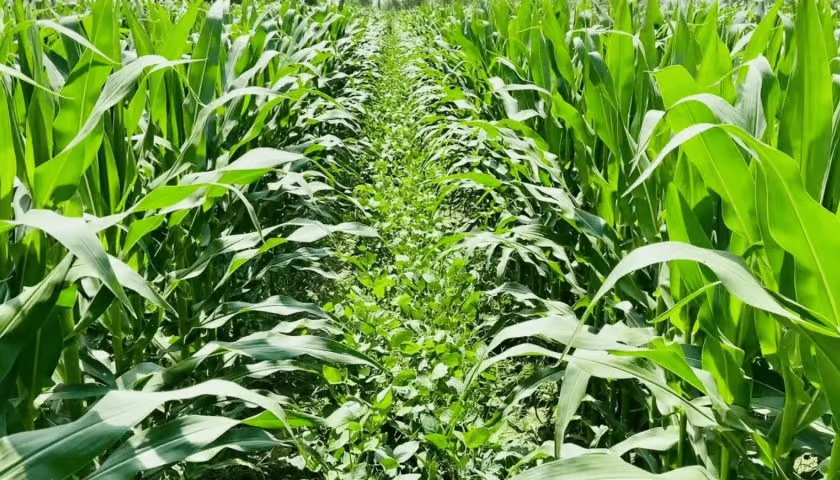
PAKISTAN – China and Pakistan have taken a significant step to strengthen agricultural collaboration with the signing of a Memorandum of Understanding (MoU) on cooperation in maize breeding and industrialization development.
The agreement, signed on September 5, brings together Hubei University Modern Agricultural Innovation Research Institute and Hubei D-Gene Seed Incorporated Company from China, alongside Patron Seeds (Pvt) Ltd, Multan, and the Department of Plant Breeding & Genetics at the University of the Punjab.
The MoU focuses on biotechnology breeding, seed production and processing, demonstration and promotion, and advancing industrial development in maize.
Speaking at the signing, Professor Yuan Guobao, Chairman of the Hubei Technical Market Association, underlined the importance of maize research in addressing global food challenges.
“Developing drought- and infertility-tolerant crops is imperative, and maize, as a global staple, is the perfect choice,” Yuan said.
Yuan, who has visited Pakistan more than 30 times, highlighted the country’s agricultural potential, noting that maize production could increase by 30–50% through the adoption of improved varieties and methods.
He emphasized that while China produces substantial volumes of maize, it still imports 20–30 million tons annually to meet domestic demand, particularly for its growing livestock industry.
The varieties introduced under this cooperation are heat-resistant, designed for Pakistan’s high temperatures that often reach 40°C, conditions that limit growth for many crops.
Chinese researchers have tailored sowing, heading, and grain-filling periods to align with Pakistan’s climate and will conduct local trials to identify the most suitable varieties for different regions.
“Only through local breeding can we find the most suitable varieties for the local area. In addition, we plan to cultivate local talents related to crop gene editing technology, which is also the top priority of this China-Pakistan cooperation plan,” Yuan noted.
Beyond seed research, the two sides are exploring industrial upgrades across the maize value chain. Discussions included strategies for efficient straw utilization to support the livestock industry, as well as innovations in fertilizer and machinery.
Yuan suggested customized fertilizers for high-quality maize varieties, applied simultaneously during sowing, and specialized agricultural machinery to address labor inefficiencies caused by extreme heat.
The cooperation is expected to improve Pakistan’s maize yields, enhance industrial capacity, boost feed availability, and support broader agricultural modernization in the region.
Sign up to HERE receive our email newsletters with the latest news and insights from Africa and around the world, and follow us on our WhatsApp channel for updates.