
Burkina Faso secures US$20M loan to boost agricultural irrigation
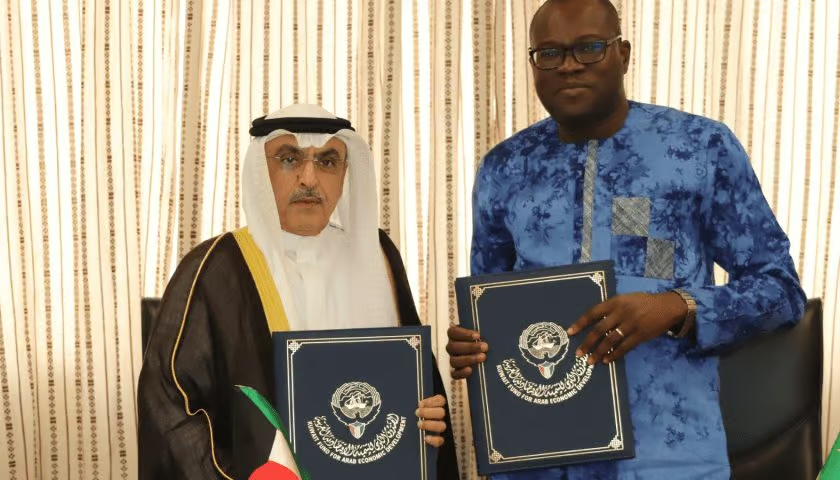
BURKINA FASO – Burkina Faso has secured a US$20 million loan from the Kuwait Fund for Arab Economic Development (KFAED) as part of the government’s efforts to promote agricultural irrigation.
Announced on February 24 by the Ministry of Economy and Finance, this funding is earmarked for developing 2,000 hectares of irrigated land in Sono and Kouri regions within Kossi province.
The project aims to produce 40,000 tons of crops annually, including staples like rice and maize, as well as vegetables such as onions, tomatoes, and green beans, and fruits like bananas.
The total investment for this initiative is estimated at US$59 million. Beyond boosting crop yields, the project is expected to generate approximately 8,000 direct jobs for youth and women, along with numerous indirect employment opportunities.
This development is part of a broader effort to strengthen agricultural irrigation in the country. On February 12, the Council of Ministers approved a US$144 million financing agreement with the International Development Association (IDA) to support the Burkina Faso Water Security Project over six years.
Additionally, in January, the West Africa Food System Resilience Program (PRSA-BF) announced plans to invest over US$23.6 million in 2025 for projects focused on expanding irrigated areas, lowlands, and market gardens.
Historically, Burkina Faso’s agriculture has been predominantly rain-fed, making it vulnerable to climatic challenges like droughts. Enhancing irrigation infrastructure is crucial for improving food security and resilience against climate change.
Despite having over 233,500 hectares of potential irrigable land suitable for rice cultivation, official data indicates that less than 5% is currently developed.
However, the country has ramped up initiatives to boost local production and halt imports. For the 2024/2025 marketing year, Burkina Faso anticipates a record cereal harvest, with production forecast to reach over 6 million tonnes.
This represents an 18% increase compared to the previous year’s yield of 5.1 million tonnes and a 21.4% rise above the five-year average. The announcement was made on December 5 by the Ministry of Agriculture during a Council of Ministers meeting.
The growth is attributed to favorable climatic conditions, with cumulative rainfall from April to October exceeding normal levels across much of the country.
However, localized deficits in some areas due to extreme weather underline the challenges of climate variability, hence the shift to irrigation is timely.
The KFAED has a longstanding partnership with Burkina Faso, having provided 18 loans totaling approximately US$215.2 million across various sectors.
Sign up to HERE receive our email newsletters with the latest news and insights from Africa and around the world, and follow us on our WhatsApp channel for updates.