

AFEX forecasts price stability for Nigeria’s staple grains in 2025
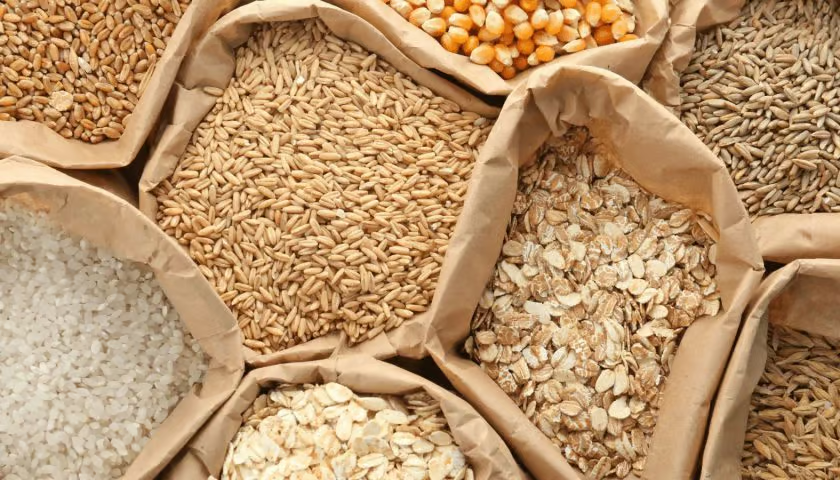
NIGERIA – AFEX, a leading commodities exchange in Nigeria, has projected price stabilisation for staple grain commodities such as maize, soybean, paddy rice, and sorghum in 2025, offering a glimmer of hope for consumers grappling with record food inflation.
The report attributes the expected moderation in local prices to the Nigerian government’s implementation of a 150-day import duty on maize, which is anticipated to boost supply and ease pressure on prices.
This comes as Nigeria’s economy continues to face significant challenges, including a record-high inflation rate of 34.8 per cent in December 2024, a volatile exchange rate, and persistent issues in the agricultural sector such as climate change, rising input costs, and low productivity.
AFEX’s report highlights key trends in commodity prices over the past year. In 2024, commodity prices rose by 4 per cent, a reversal from the 7 per cent decline recorded in 2023.
The 2023 price drop was driven by a 9 percent decrease in food prices and a 5 percent decline in raw material costs. However, 2024 saw an 8 percent decline in food prices, largely due to an 11 percent drop in oils and meals prices and a significant 16 percent decrease in grain prices.
Despite these declines, global maize production reached a record-breaking 1.13 billion metric tonnes in 2024, reflecting a 6 per cent year-on-year increase. This surge in output led to a 25 per cent year-on-year decline in global maize prices.
In contrast, Nigeria experienced a 92 percent year-on-year increase in maize prices, peaking at NGN908,000 (US$597) per metric tonne in July and closing the year at approximately NGN660,000 (US$434) per metric tonne.
Paddy rice, another staple commodity, saw a 6 percent price increase due to India’s export restrictions, seasonal supply tightness, and the adverse effects of El Niño on global rice production.
Speaking at the report’s unveiling, Akinyinka Akintunde, President and CEO of AFEX Nigeria, emphasized the need for innovative solutions to stabilize Nigeria’s agricultural value chain.
“As we confront record food inflation and macroeconomic pressures, this report provides critical insights to mitigate climate risks, optimize input costs, and enhance productivity. These steps are essential to resolving food insecurity and fostering sustainable growth in the sector,” he said.
AFEX also stressed the importance of policy coordination and private-sector engagement, particularly within the capital market, to drive investment in agriculture. The report serves as a roadmap for stakeholders to address the compounding challenges of climate volatility, fragmented supply chains, and under-investment.
Ikenna Egbukole, Executive Chairman of MITSUN Group, echoed these sentiments, calling for a unified approach to tackle food insecurity.
“The challenges demand urgent, coordinated action. Leveraging policy reforms, private-sector innovation, and capital market interventions is crucial to building resilience across the agricultural ecosystem,” he stated.
Sign up to HERE receive our email newsletters with the latest news and insights from Africa and around the world, and follow us on our WhatsApp channel for updates.