Kenya seeks more Ugandan maize imports with aflatoxin-free grain conditions
Kenya is ready to increase maize imports from Uganda but insists that strict food safety standards must accompany expanded trade.
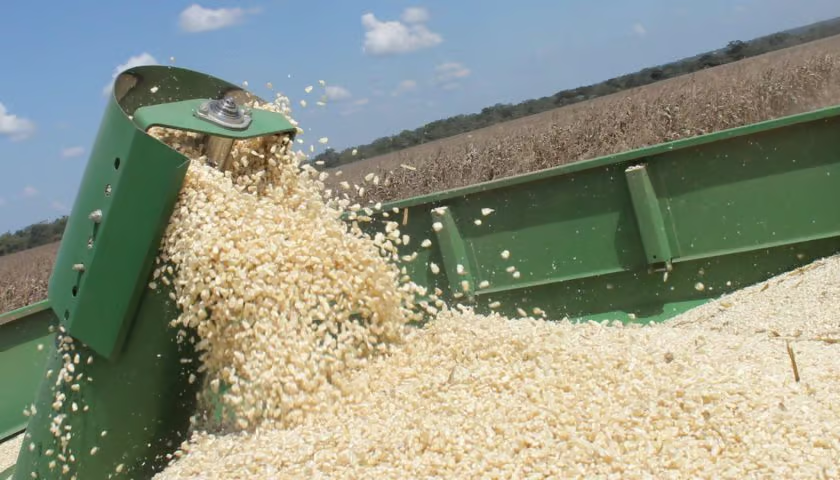
KENYA – Kenya has said it is ready to significantly increase maize imports from Uganda to bridge a growing national supply deficit, but it is demanding tighter controls on moisture and aflatoxin contamination before expanded trade can proceed.
The government has imposed strict food safety conditions, insisting that all imported grain must be properly dried and entirely free from aflatoxin contamination before crossing the border.
Speaking during a bilateral meeting with Uganda’s Parliamentary Committee on Agriculture in Nairobi, Kenya’s Cabinet Secretary for Agriculture and Livestock Development, Mutahi Kagwe, emphasized that while Kenya welcomes trade with its neighbor, public safety remains non-negotiable.
“We need a system in Uganda where maize is dried before it crosses the border. We can buy, but we need aflatoxin-free maize,” Kagwe said.
Kagwe noted that high moisture content and persistent aflatoxin risks have previously made several Kenyan millers hesitant to purchase Ugandan grain.
He urged Ugandan authorities to strengthen post-harvest handling processes and establish robust testing mechanisms directly at the source to ensure smooth cross-border clearance.
Aflatoxin, a toxin produced by certain fungi that can develop in improperly dried or stored grain, remains a significant food-safety concern across East Africa.
Kenya caps total aflatoxins in maize at 10 parts per billion, in line with Codex Alimentarius and East African Community standards, and millers have previously flagged Ugandan consignments testing far above that threshold at the Busia border point.
The push to expand cross-border maize trade aligns with broader continental objectives under the African Continental Free Trade Area (AfCFTA) and the East African Community (EAC) protocols.
Both nations are attempting to dismantle non-tariff barriers to foster mutually beneficial trade while harmonizing regional food safety guidelines.
Highlighting regional interdependence, trade representatives noted that African nations must leverage each other’s production strengths to build a resilient food supply network.
The renewed push for Ugandan maize comes as Kenya prepares for a potential supply deficit. The government has announced plans to facilitate the importation of up to 1 million 90-kilogram bags of maize to help bridge anticipated shortages that could reach 5.4 million 90-kilogram bags by the end of September and stabilize the food market.
Kenya has also been considering yellow maize imports for animal-feed manufacturers as competition for white maize intensifies between feed producers and millers.
Maize remains a strategically important commodity for Kenya, while Uganda has significant agricultural production capacity and regularly supplies regional markets.
The push for greater maize trade is therefore expected to remain closely linked to discussions on food safety, quality standards, market access and agricultural financing.
For Kenya, expanding access to safe imports comes at a crucial moment. Disrupted rainfall patterns and severe droughts in key agricultural regions have sharply reduced domestic yields, widening the shortfall between national production and the country’s high consumption demands.
Securing clean, high-quality grain from Uganda serves as a strategic bridge to maintain stable mill supply and prevent food security spikes.
For Kenya, ensuring that imported maize meets safety requirements will remain critical, particularly because of the health risks associated with aflatoxin contamination.
For Ugandan producers, improving post-harvest management and moisture testing offers a lucrative way to capture a larger share of the Kenyan consumer market.
The two countries are now seeking to balance facilitating agricultural trade with protecting consumers as they pursue the broader goal of strengthening intra-African commerce.
Officials from both delegations concluded the session by agreeing to foster deeper cooperation on agricultural technology, pest management, cold chain storage, and technical support to eliminate future trade bottlenecks.
Sign up to HERE receive our email newsletters with the latest news and insights from Africa and around the world, and follow us on our WhatsApp channel for updates.