
ICRISAT secures gene editing license to speed up climate ready crops
The agreement gives ICRISAT access to gene editing technology that will support faster development of stronger crop varieties for farmers across Asia and Africa.
AFRICA/ASIA – The International Crops Research Institute for the Semi-Arid Tropics (ICRISAT) has secured long term access to CRISPR Cas9 gene editing technology through a humanitarian licensing agreement with Corteva and The Broad Institute, Inc., giving the research organization a major boost in its work to support smallholder farmers across Asia and Africa.
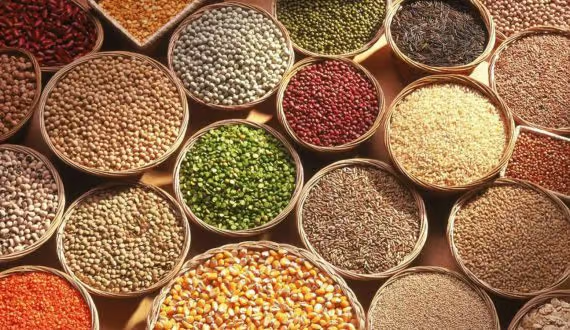
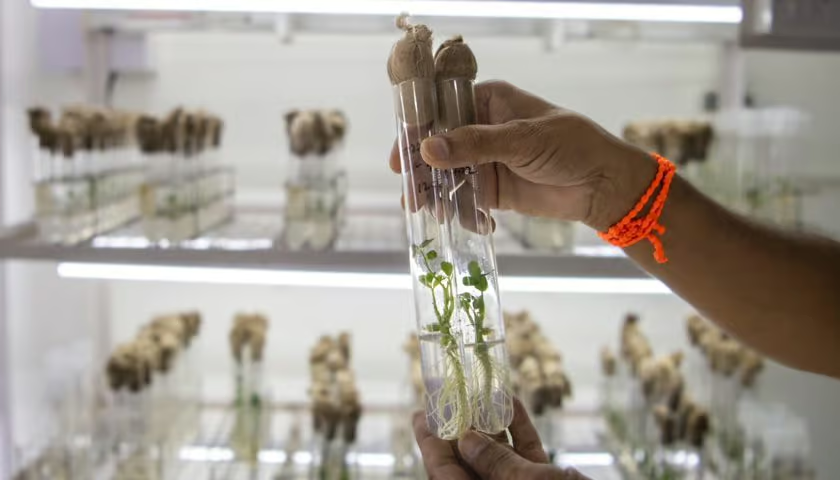
The agreement allows ICRISAT to use gene editing to develop improved varieties of pulses, millets and oilseeds that can better withstand drought, heat, floods, pests and diseases. It also supports efforts to improve crop yields, nutritional value and other traits that farmers value, while avoiding the introduction of DNA from unrelated species.
Gene editing offers a much faster process than conventional breeding, which often takes many years to combine useful crop traits. The agreement gives ICRISAT the ability to move promising research into practical crop development for farmers across its mandate regions.
ICRISAT Director General Dr Himanshu Pathak said the agreement marks an important step for the institute and the farming communities it serves.
“Corteva’s leadership in gene editing, combined with ICRISAT’s world leading breeding programs and our other long standing partnerships with national agricultural research systems, this new capability will accelerate the delivery of practical crop innovations that strengthen food security, improve livelihoods and build more resilient agricultural systems across Asia and Africa,” said Dr Pathak.
The license covers key crops including sorghum, pearl millet and other millets, chickpea, pigeonpea and groundnut. It also strengthens ICRISAT’s existing work in genomics, crop breeding, phenomics, seed systems and partnerships with national agricultural research systems, helping speed up the delivery of improved crop varieties to farmers.
Corteva welcomed the agreement and said it would support efforts to improve food production in regions that face growing climate risks.
“We’re proud to collaborate with ICRISAT and help smallholder farmers across Asia and Africa access gene editing technology,” said Dr Wendy Srnic, Vice President, Biotechnology for Corteva.
“We look forward to working together to develop crops that can better withstand extreme weather events, pests and diseases and help farmers feed their communities while building a more resilient global food system,” she added.
The agreement also expands the range of scientific tools available to ICRISAT as it continues working with national research partners to bring improved seed varieties to farmers more quickly, supporting stronger food production and better farm incomes across Asia and Africa.
Sign up to HERE receive our email newsletters with the latest news and insights from Africa and around the world, and follow us on our WhatsApp channel for updates.