

SABIC Agri-Nutrients shifts focus to conventional ammonia, urea plant in Jubail
The company drops its earlier low-carbon ammonia plan after securing feedstock for a major expansion project.
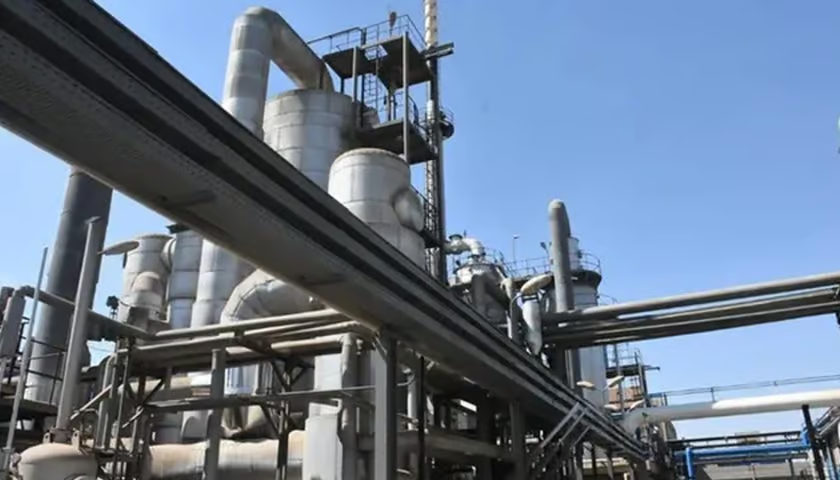
SAUDI ARABIA – Saudi fertiliser producer, SABIC Agri-Nutrients Company, has changed its plan for a new plant in Jubail Industrial City, moving from low-carbon ammonia to a conventional ammonia and urea complex.
The Saudi-listed firm said it received approval from the Ministry of Energy to allocate feedstock for its seventh facility in Jubail. This decision clears the way for the company to proceed with construction under the revised plan.
The company will now produce about 1.2 million metric tonnes per year of conventional ammonia and 2.6 million metric tonnes of urea. Earlier plans, announced in July 2024, focused on producing the same volume of low-carbon ammonia alongside 1.1 million tonnes of urea and specialised agri-nutrients.
This change will significantly raise SABIC Agri-Nutrients’ urea capacity. Output is set to grow from around 4.8 million tonnes per year to about 7.4 million tonnes, marking a 54 percent increase.
The company said it will share further updates once it reaches key milestones, including the final investment decision and the award of engineering and construction contracts.
SABIC Agri-Nutrients reported solid financial results in 2025. Revenue reached SAR 13.08 billion, equivalent to about US$3.5 billion, while net profit rose to SAR 4.32 billion, or about US$1.2 billion. These figures reflect an 18 percent rise in revenue and a 30 percent increase in profit compared to the previous year.
A company statement noted, “The feedstock allocation supports our long-term production plans and strengthens our position in the fertiliser market.”
Market outlook supports expansion
The project comes as Saudi Arabia’s fertiliser market shows steady growth. Estimates place the market at about US$0.86 billion in 2026, with projections reaching US$1.1 billion by 2031. Other estimates suggest the market could grow from US$4.0 billion in 2024 to US$7.5 billion by 2032.
Demand for fertilisers continues to rise due to government efforts to support food production and reduce reliance on imports. The country is also working to grow its role as a supply hub for regions such as Africa and South Asia.
Industry analysts say higher demand for grains, cereals, and other crops will continue to support urea production growth. SABIC Agri-Nutrients’ latest move aligns with these trends as it expands capacity to meet both local and export demand.
Sign up to HERE receive our email newsletters with the latest news and insights from Africa and around the world, and follow us on our WhatsApp channel for updates.

