
Uganda’s oilseed farmers double yields, incomes through commercial farming
The project aims to accelerate commercialization of key oilseed value chains while improving the livelihoods and resilience of smallholder farmers.
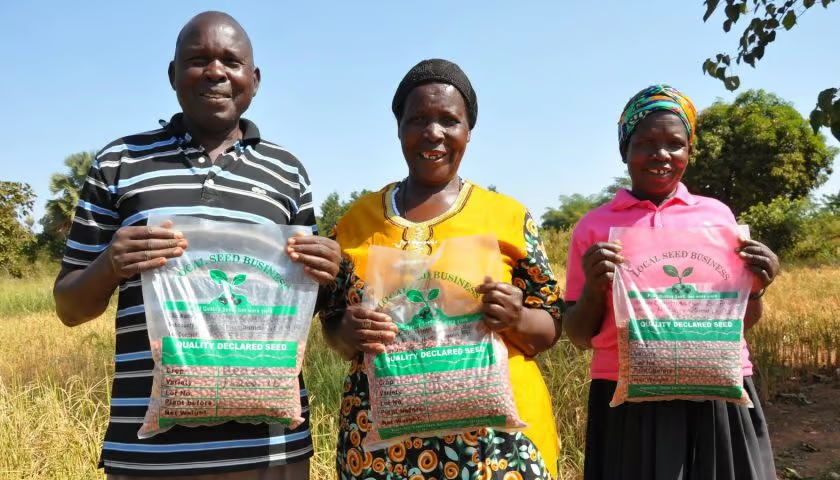
UGANDA – Smallholder oilseed farmers across Uganda are experiencing significant increases in agricultural productivity and household income following a coordinated shift from subsistence agriculture to structured commercial farming.
Interventions under the government’s National Oil Seeds Project (NOSP) have helped participating farming communities double crop yields for major staples like soybeans and groundnuts, according to mid-term evaluation reports.
By adopting high-yielding certified seed varieties, modern agronomic practices, and direct market linkages, rural households are transitioning toward sustainable agribusinesses that generate higher revenues and foster local economic growth.
Field assessments conducted in key producing districts, including Kiboga and Hoima, showcase substantial gains among local producer groups and individual smallholders.
In Kiboga, the 50-member Tukwatanitse Farmers Group reported a surge in groundnut output from 6,020 kilograms in recent seasons to 9,370 kilograms, boosting their collective earnings from Shs22.5 million (US$5,857.97) to Shs40 million (US$10,414.16).
Similarly, in Hoima, the St. Paul Twekembe Farmer Group expanded its soybean seed cultivation from two acres to 14 acres, illustrating growing technical capability and commercial confidence among smallholders who previously relied solely on traditional farming techniques.
The economic transition has delivered immediate improvements in rural living standards, quality of life, and household infrastructure.
Beneficiaries report utilizing surplus income from crop sales to fund higher education for family members, build permanent homes, improve domestic sanitation facilities, and reinvest capital into expanding farm acreage.
Beyond raw grain harvesting, many farmers are increasingly engaging in value addition, extracting refined cooking oil and producing high-protein seed cake for livestock feed, which commands higher prices in regional markets.
The National Oil Seeds Project, supported by the Ministry of Agriculture, Animal Industry and Fisheries (MAAIF) alongside international development partners like the International Fund for Agricultural Development (IFAD), targets over 120,000 farmers nationwide.
By streamlining supply chains, improving input access, and integrating smallholders into commercial value chains, Uganda aims to satisfy domestic demand for vegetable oil while positioning the nation as a competitive exporter within East Africa.
Agricultural officials emphasize that sustained investments in extension services and farmer organization will remain essential to consolidating these gains and solidifying commercial agriculture as a primary driver of rural poverty reduction.
Sign up to HERE receive our email newsletters with the latest news and insights from Africa and around the world, and follow us on our WhatsApp channel for updates.