
FAO, Nigerian Government launch 2025 food and agriculture policy monitoring review
The initiative aims to guide evidence-based agricultural transformation under the National Agricultural Technology and Innovation Policy (NATIP).
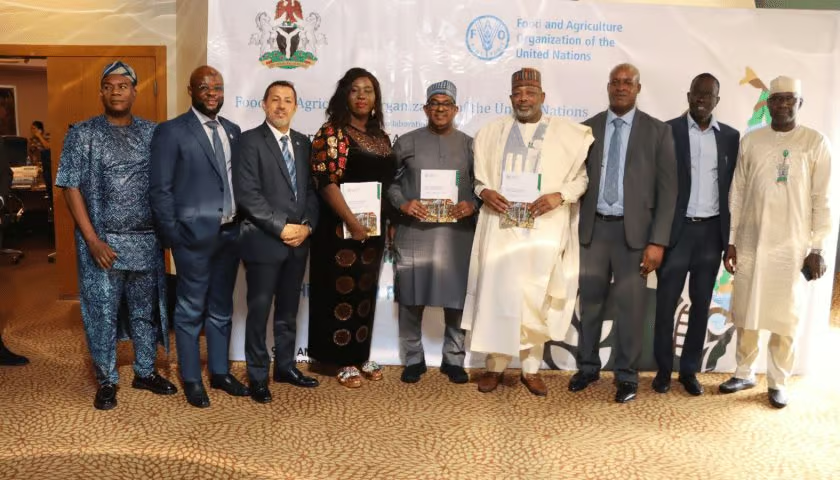
NIGERIA – The Food and Agriculture Organization of the United Nations (FAO), in partnership with Nigeria’s Federal Ministry of Agriculture and Food Security (FMAFS), has officially launched the 2025 Nigeria Food and Agriculture Policy Monitoring Review (PMR) in a high-level event held in Abuja.
This landmark initiative, developed under the framework of the National Agricultural Technology and Innovation Policy (NATIP), aims to drive evidence-based agricultural transformation to bolster food security, enhance yields, and promote sustainable development across Nigeria’s agrifood systems.
The unveiling ceremony convened a diverse group of stakeholders, including senior government officials, representatives from the World Bank, private sector leaders, farmer organizations, civil society groups, and academic institutions.
The event fostered strategic dialogue on the future of Nigeria’s agricultural policy, emphasizing the need for data-driven reforms to address the nation’s pressing food security challenges.
A strategic tool for agricultural transformation
The PMR, developed with technical support from FAO’s Monitoring and Analysing Food and Agricultural Policies (MAFAP) programme, provides a comprehensive analysis of public expenditure and commodity price incentives from 2015 to 2021.
The report highlights key trends and challenges in Nigeria’s agricultural policy landscape, offering critical insights to guide policy implementation and investment planning.
Notably, while nominal agricultural spending increased over the period, it accounted for only 2% of federal expenditure, falling significantly short of the 10% commitment outlined in the 2025 Kampala Declaration, a regional pledge to prioritize agricultural investment.
The MAFAP analysis revealed that rice production has benefited from protective trade measures, boosting domestic prices and supporting local farmers.
However, crops like maize and sorghum face persistent disincentives due to weak market integration and restrictive trade policies, underscoring the need for targeted reforms to enhance competitiveness and productivity.
Speaking at the launch, Nigeria’s Minister of Agriculture and Food Security, Senator Abubakar Kyari, emphasized the PMR’s alignment with the current administration’s priorities under President Bola Ahmed Tinubu’s Renewed Hope Agenda.
He highlighted the report’s timely release, as the Federal Ministry of Finance and Budget Planning prepares the 2026 budget proposal.
“We must secure our future through food security. Increasing yields and improving nutrition are central to our agenda. The MAFAP analysis provides policymakers and development partners with a clear direction for targeted investments and impactful reforms,” Kyari stated.
The minister underscored the importance of credible research in guiding government expenditure and resource allocation, particularly as Nigeria grapples with economic challenges and a growing population projected to reach 400 million by 2050.
Dr. Hussein Gadain, FAO Representative in Nigeria and to the Economic Community of West African States (ECOWAS), highlighted the strategic partnership between FAO and the Nigerian government.
“The landmark policy review reflects our shared commitment to transforming Nigeria’s agricultural sector. The evidence and recommendations presented will serve as a foundation for inclusive growth, improved food security, and sustainable development,” Gadain said.
He called for increased funding to meet the 10% expenditure target set by the Kampala Declaration, emphasizing that Nigeria’s success in agricultural transformation could have far-reaching implications for food security across Africa.
The PMR’s findings are particularly critical given Nigeria’s ongoing food security challenges. A 2024 Cadre Harmonisé analysis projected that 33.1 million Nigerians will face high levels of food insecurity in 2025, a 7 million increase from the previous year, driven by economic hardship, record-high inflation (40.9% for food in June 2024), climate change impacts, and persistent violence in the northeastern states.
Approximately 5.4 million children and 800,000 pregnant and breastfeeding women are at risk of acute malnutrition, with 1.8 million children potentially facing Severe Acute Malnutrition (SAM).
Sign up to HERE receive our email newsletters with the latest news and insights from Africa and around the world, and follow us on our WhatsApp channel for updates.