
Malawi promotes indigenous flour as FAO backs drought resilient farming
The initiative highlights traditional crops while supporting farmers with skills and research to improve food production under dry conditions.
MALAWI – Malawi is giving fresh attention to indigenous flour crops as the Food and Agriculture Organization of the United Nations (FAO) works with local communities to strengthen food production in areas affected by drought.
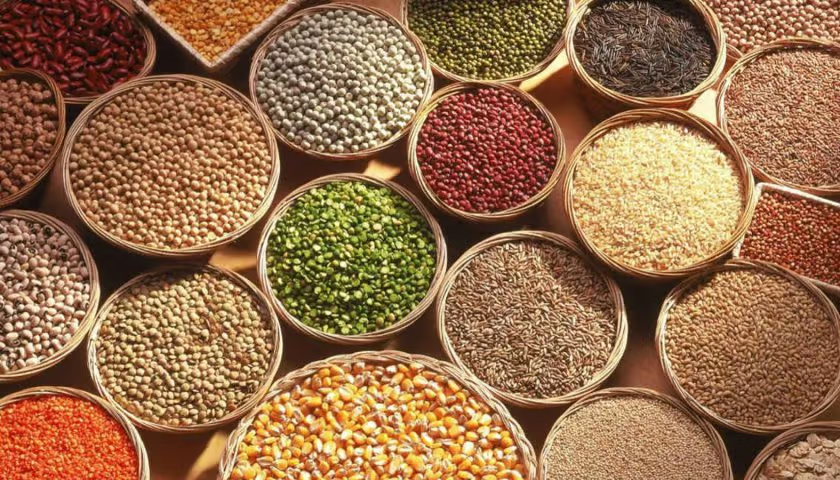
FAO recently held a Diversity Seed Fair in Chikwawa district, southern Malawi, as part of its programme to bring back traditional crops that have become less common over the years. Many of these crops contain valuable nutrients and can grow well in dry conditions, yet they have received little research and investment compared to maize and wheat.
About 75 farmers took part in the event, displaying products such as biscuits made from sorghum and cowpeas to more than 200 visitors, including government researchers, private sector representatives and community leaders. These crops formed part of farming systems in Malawi for generations before imported staples became more common during the second half of the twentieth century.
FAO and Malawi’s Ministry of Agriculture, Irrigation and Water Development are supporting communities as they improve farming practices and increase the use of indigenous crops that can perform better during periods of low rainfall.
“In the past we used to plant many maize seeds in one planting station but now we have been trained in conservation agriculture,” said Elda Saliva, a farmer from Thimba village in Makanda. “With these new methods, our yields have increased, allowing us not only to feed our families, but also to earn income from the surplus.”
The work forms part of FAO’s Addressing Water Scarcity in Agriculture and the Environment initiative, which started with a pilot programme in Malawi. The project trained about 20 government researchers and extension officers to collect and analyse agricultural data while improving field water management and drought screening.
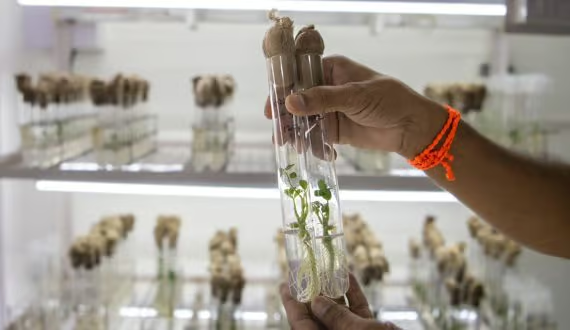
Government specialists also assessed 24 cowpea varieties and 30 sorghum varieties under both irrigated and dry conditions. They collected seeds from rural communities and the national gene bank to identify varieties that perform well during drought.
The latest effort adds to Malawi’s wider plans to strengthen its agricultural sector. Earlier this year, Wait Holdings started operating a new fertiliser blending plant in Blantyre under its MlimiFert brand.
The facility produces up to 50 metric tonnes of fertiliser per hour, helping increase local fertiliser production while supplying blends designed for Malawi’s crops and soil conditions.
The investment also supports the country’s efforts to reduce dependence on imported fertiliser and improve access for farmers.
Sign up to HERE receive our email newsletters with the latest news and insights from Africa and around the world, and follow us on our WhatsApp channel for updates.