

Research & Development
-

Iraq opens modernized plant genetic resources bank to strengthen food security
The bank is designed to safeguard Iraq’s local crop varieties, wild relatives, and traditional seed material, which face increasing pressures from water scarcity, salinity, heat, and changing farming systems.
-
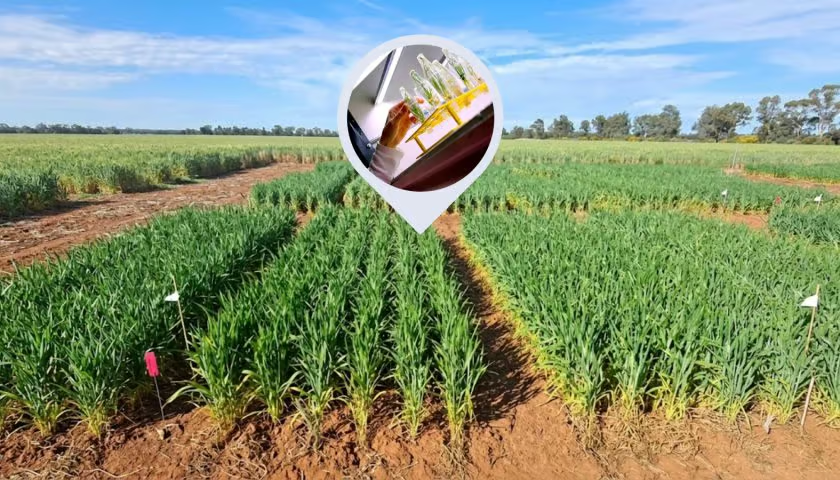
OlsAro closes US$5.6M seed investment to scale climate-resilient cereal genetics
The investment will support international field trials, research and development, and partnerships with seed companies as the business expands its portfolio of crops designed to withstand environmental stresses.
-
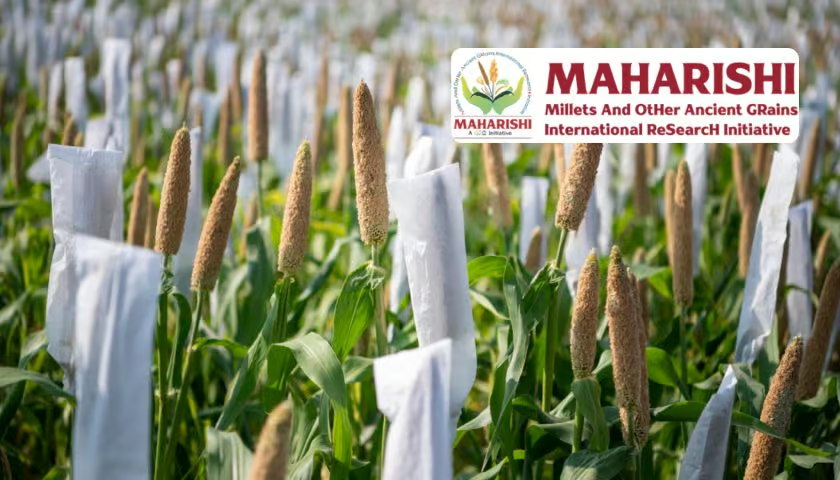
MAHARISHI launches millets training program for African researchers
The initiative focuses on improving research capabilities in millets and other ancient grains, which are attracting growing attention for their potential to support food security, dietary diversity and agricultural resilience.
-
Vylor, Rainbow Crops partner to accelerate development of gene-edited corn traits
The initiative combines artificial intelligence, multiplex genome editing, precision breeding, and automated phenotyping to develop resilient corn traits that can withstand severe climate conditions while maximizing yield potential and input efficiency.
-

K-State opens US$130M Western Star Global Grain and Food Center
The new center brings K-State’s internationally recognized strengths in grain, food, and animal sciences together in an interdisciplinary environment designed to accelerate discovery, prepare the next generation of industry leaders, and create solutions for a rapidly changing global food system.