
Iraq opens modernized plant genetic resources bank to strengthen food security
The bank is designed to safeguard Iraq‘s local crop varieties, wild relatives, and traditional seed material, which face increasing pressures from water scarcity, salinity, heat, and changing farming systems.
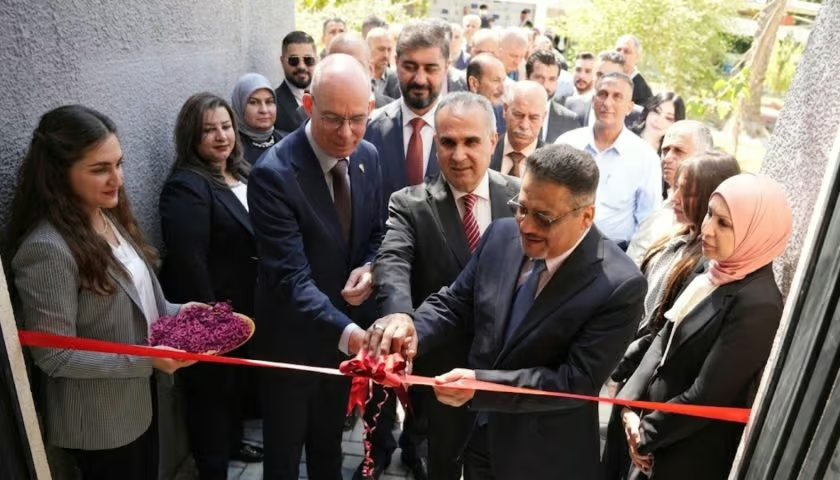
IRAQ – Iraq has strengthened its agricultural research and climate-resilience capabilities after inaugurating its rehabilitated National Plant Genetic Resources Bank in Abu Ghraib, Baghdad.
The facility was officially opened through a partnership involving the Food and Agriculture Organization of the United Nations (FAO), the European Union (EU) and Iraq’s Ministry of Agriculture.
The rehabilitation aims to improve the conservation and sustainable use of the country’s plant genetic resources, providing an important foundation for crop improvement, scientific research and long-term food security.
FAO implemented the project in close collaboration with the Ministry of Agriculture, funded by the European Union under an initiative to restore and strengthen the resilience of agrifood systems in southern Iraq.
Established in 1977, the National Plant Genetic Resources Bank has played a central role in safeguarding Iraq’s agricultural heritage for nearly five decades.
Its modernization includes improved seed conservation and storage technologies, expanded storage capacity, digital documentation systems and solar energy infrastructure to support more sustainable operations.
According to FAO, the upgraded facility can preserve up to 30,000 seed samples for medium-term conservation and 20,000 samples for long-term storage.
The improved digital systems are expected to strengthen collection documentation and management, making valuable genetic material more accessible for research and crop breeding.
Iraq occupies part of the Fertile Crescent, one of the world’s historic centres of agricultural development and crop diversity.
Its agricultural heritage includes wheat, barley, lentils, chickpeas and their wild relatives, which contain genetic characteristics that may help researchers develop improved crop varieties.
Conserving these resources is increasingly important as Iraqi agriculture faces challenges associated with drought, rising temperatures, water scarcity and emerging crop pests and diseases.
Beyond preserving seeds, the rehabilitated Plant Genetic Resources Bank will support researchers, plant breeders, and other specialists working to conserve agricultural biodiversity, improve crops, and strengthen the resilience of Iraq’s agrifood systems for generations to come.
Senior representatives from the Ministry of Agriculture, FAO, and the EU Delegation to Iraq attended the inauguration.
Officials highlighted the importance of cooperation between national institutions and international development partners in strengthening agricultural sustainability and protecting biodiversity.
The rehabilitated bank also complements a recently inaugurated seed and gene bank in Sulaymaniyah, helping reinforce Iraq’s wider national system for conserving plant genetic resources.
Beyond seed storage, the facility is expected to serve researchers, plant breeders and agricultural specialists working to improve crop varieties and preserve agricultural biodiversity.
Its long-term contribution will depend on continued investment, effective collection management and the use of conserved genetic material in research and breeding programmes.
The initiative supports the United Nations Sustainable Development Goals, particularly Zero Hunger, Climate Action and Life on Land, while reinforcing efforts to build more resilient and sustainable agrifood systems in Iraq.
Sign up to HERE receive our email newsletters with the latest news and insights from Africa and around the world, and follow us on our WhatsApp channel for updates.