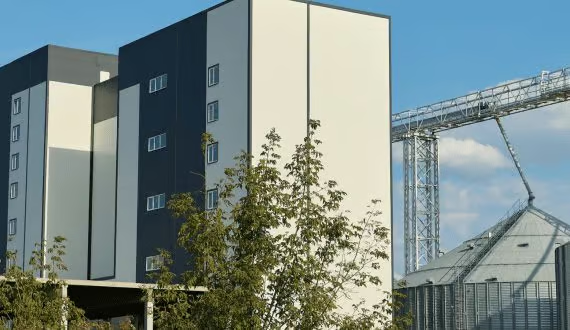

Nigeria moves to revamp silo concession programme to bolster food security
The move is aimed at creating a resilient, efficient, and effective storage system that will minimise losses, strengthen the food storage ecosystem, and help achieve food sovereignty.

NIGERIA – The Federal Ministry of Agriculture and Food Security has announced plans to revitalise the Silos Concession Programme as part of efforts to strengthen Nigeria’s food storage system, reduce massive post-harvest losses, and advance food and nutrition security.
The move aims to establish a more resilient and efficient storage infrastructure that will reduce waste, enhance year-round food availability, and foster economic growth. Nigeria currently loses an estimated US$10 billion annually due to poor post-harvest management, underscoring the urgency of the programme.
Speaking at a high-level meeting with the Infrastructure Concession Regulatory Commission (ICRC) in Abuja, the Minister of Agriculture described silos as a critical element of the nation’s food security architecture. He emphasized that revitalising storage facilities would not only reduce losses but also support President Bola Ahmed Tinubu’s agricultural transformation agenda aimed at achieving food sovereignty.
The Minister revealed that while 17 silo complexes were concessioned to five private companies, only Flour Mills of Nigeria, operating three facilities through separate Special Purpose Vehicles (SPVs), has fully met performance and financial obligations. In contrast, several concessionaires have failed to rehabilitate facilities as agreed, with reports of vandalism and infrastructure collapse at sites such as Ikorodu and Ogoja. Some operators have also defaulted on payments, leaving government coffers short of expected revenue.
“Our review showed little or no progress in some silo complexes. In fact, some facilities have suffered vandalism, while perimeter fences collapsed in others. This situation cannot continue,” the Minister said, stressing that oversight and compliance enforcement would be intensified. He noted that the Ministry would partner closely with the ICRC to ensure that only competent private operators manage silo assets moving forward.
In his remarks, Dr Jobson Oseodian Ewalefoh, ICRC Director General, highlighted the need for reforms in the concession structure, stressing that “only private companies with real operational needs for silos should be retained.” He added that non-performing and abandoned facilities should be repossessed by the federal government to safeguard national food security interests.
The renewed focus on storage aligns with Nigeria’s broader agricultural policies, which prioritize reducing dependence on imports and stabilizing food supplies.
During the recent during the 16th edition of the African Food Systems Forum (AFSF) held from August 31 to September 5 in Dakar, Senegal, Abubakar Kyari, Minister of Agriculture announced that the country has unveiled the Nigerian Post-Harvest Systems Transformation (NiPHaST) program, a 10-year strategy designed to reduce post-harvest losses and strengthen the country’s food security.
The initiative aims to mobilise US$3.5 billion in investment, with strong involvement from the private sector.
NiPHaST aims to modernize and expand Nigeria’s storage systems, ranging from household facilities to community warehouses and national strategic reserves.
Sign up to HERE receive our email newsletters with the latest news and insights from Africa and around the world, and follow us on our WhatsApp channel for updates.